

The Technology Revolution in Value-Add Multifamily: How Smart Renovations Are Driving Returns in 2025

Updated: Oct 22, 2025
By Diego Guerra
Updated October 15, 2025
The multifamily value-add landscape is experiencing a technological transformation that's reshaping how investors approach Class B and C renovations. As traditional renovation strategies face rising costs and labor shortages, smart technology integration is emerging as the key differentiator for maximizing returns while reducing operational overhead. This analysis explores how GCP and other forward-thinking investors are leveraging technology to create competitive advantages in today's challenging market environment.
The New Value-Add Playbook: Beyond Cosmetic Upgrades
Smart Home Integration: The New Standard
Today's renters, particularly millennials and Gen Z, expect technology-enabled living experiences. Our recent renovations have shown that properties incorporating smart home features command 8-12% rent premiums over traditional upgrades alone. Key technologies driving this premium include:
• Smart Thermostats: Reducing utility costs by 15-20% while providing tenant convenience
• Keyless Entry Systems: Eliminating lockout calls and improving security
• Smart Lighting: LED systems with app control that appeal to tech-savvy renters
• High-Speed Internet Infrastructure: Essential for remote work capabilities

Operational Technology: The Hidden Value Creator
While tenant-facing technology gets attention, operational technology is where the real value lies for investors:
Predictive Maintenance Systems: IoT sensors monitoring HVAC, plumbing, and electrical systems reduce emergency repairs by up to 30% and extend equipment life by 2-3 years.
Automated Leasing Platforms: Digital applications and virtual tours have reduced our leasing costs by 25% while improving prospect conversion rates.
Energy Management Systems: Real-time monitoring and automated controls have decreased utility expenses by 18% across our portfolio.

Market Dynamics Supporting Tech-Forward Value-Add
The Labor Shortage Solution
With construction and maintenance labor costs up 20-25% since 2022, technology offers a path to maintain margins while improving service quality. Automated systems reduce dependency on skilled labor for routine tasks, allowing teams to focus on higher-value activities.
Financing Advantages
Lenders increasingly favor properties with technology integration, viewing them as lower-risk investments with stronger cash flows. We've seen 15-25 basis point improvements in financing terms for tech-enabled properties versus traditional renovations.
Tenant Retention Benefits
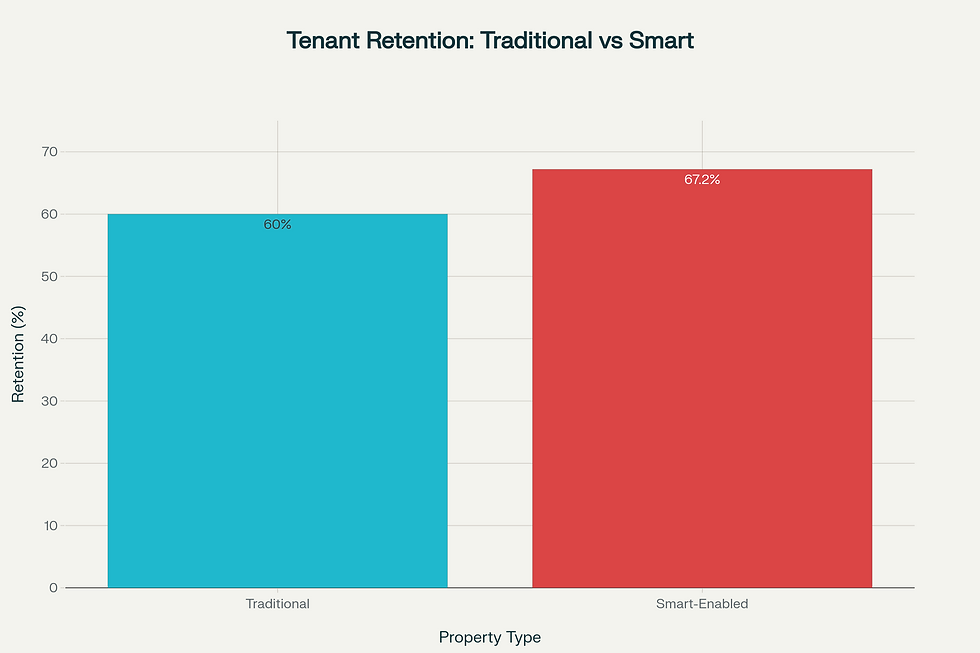
Properties with smart technology features show 12% higher renewal rates and 20% faster lease-up times. In today's competitive rental market, these metrics directly translate to improved NOI and asset values.
Implementation Strategy: Lessons from the Field
Phase 1: Infrastructure Foundation
High-speed internet backbone installation
Electrical system upgrades to support smart devices
Security system integration
Phase 2: Unit-Level Technology
Smart thermostats and lighting in all units
Keyless entry systems
Energy-efficient appliances with smart capabilities
Phase 3: Community Enhancement
Package lockers with smart notifications
Community Wi-Fi and co-working spaces
Mobile app for resident services

ROI Analysis: The Numbers Behind the Strategy
Our portfolio data shows that technology-integrated value-add projects deliver:
Average rent increases: 15-22% vs. 8-12% for traditional renovations
Reduced operating expenses: 12-18% through automation and efficiency
Faster stabilization: 6-9 months vs. 12-15 months for conventional projects
Higher exit cap rates: 25-50 basis points compression due to institutional appeal
Looking Forward: The Competitive Advantage
As the multifamily market continues to evolve, properties that fail to integrate technology will increasingly struggle to compete. The question isn't whether to incorporate smart technology into value-add strategies, but how quickly and effectively to implement these systems.
At GCP, we view technology integration not as an additional cost, but as a fundamental component of modern value-add investing. The properties we're renovating today are being positioned for the rental market of tomorrow, one where technology isn't a luxury, but an expectation.
Conclusion
The intersection of technology and traditional value-add strategies represents the next evolution in multifamily investing. As we continue to navigate elevated interest rates and construction costs, smart renovations offer a path to maintain attractive returns while building more resilient, future-ready assets.
For investors considering value-add opportunities in 2025, the message is clear: embrace technology integration as a core component of your renovation strategy, or risk being left behind in an increasingly competitive market.
Click below to explore real estate investment opportunities with GCP!


Comments